

Scathing Remarks by Trump’s Team
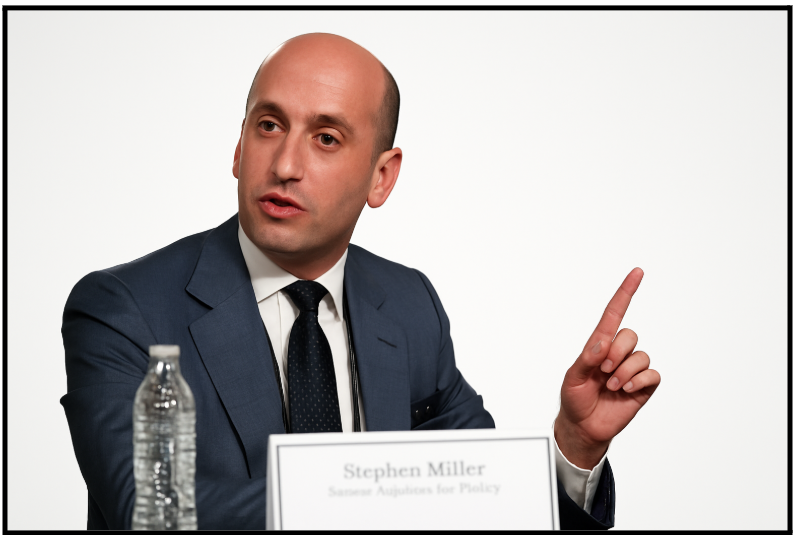
In a surprising statement which has added stress to India–U.S. ties, senior adviser to the former Trump White House and former official Stephen Miller accused India of financing the Ukraine conflict by purchasing Russian oil in mass amounts. During an appearance on a TV interview, Miller affirmed that Indian imports of Russian crude have reached levels “tied with China,” a development he referred to as “astonishing.”.
He claimed that India’s ongoing trade with Russia is a violation of the U.S. and Western efforts to cut financial support to Moscow in the ongoing Ukrainian war. His remarks were not only a threat against India but hinted at potential trade and diplomatic actions under a second Trump administration.
- “Miller asserted that India supporting the war effort by buying oil from Russia is something that cannot be tolerated.”
- “Many might be surprised to know that India is almost on the same level as China when it comes to purchasing Russian oil.”
Tariff Pressure on India
These charges come on the heels of a month-long intensifying of tensions on trade. The United States recently implemented a 25% tariff on Indian imports starting in late July. This is just described as a beginning, as the Trump administration considers even more extreme trade sanctions—up to 100% tariffs and even 500% charges—if India does not backtrack on Russian oil.
The proposed sanctions are being framed as part of a larger U.S. legislation targeting countries that continue to support Russian economic pipelines—particularly by way of defense and oil deals. India, as the world’s largest buyer of bargain Russian oil, is now in the center of these actions.
India’s Firm Response
Despite the pressure, the Indian government has made its position clear: it will continue to import Russian oil based on what is in the interest of national energy security and economic considerations. The officials have made it very clear that no policy shift has occurred, and Indian refiners—government and private—are free to purchase oil from any source, including Russia.
Prime Minister Narendra Modi, in a recent public address, indirectly replied to the criticism by saying:
“We will purchase those items which have been produced through the toil of an Indian.”
This was taken by most widely as a reassertion of India’s independent foreign policy and trade approach. In addition, Indian diplomats have consistently come to the defense of the nation’s relationship with Russia, referring to it as a “time-tested” relationship that cannot be dictated by the expectations of third parties.
Strategic Tensions and Trade Fallout
The tone and timing of the words by Miller suggest rising strategic tension between India and the U.S., even as both countries remain committed to viewing each other as vital Indo-Pacific partners. The accusation of “financing war” is a departure in tone—from veiled nudges to outright criticism.
Analysts warn that the harm will be felt in various areas:
India–U.S. Trade Deal: Negotiation for a comprehensive trade deal can be put off or stalled.
Indian industries affected by increased tariffs: The Indian pharma, textile, electronics, and auto components industries may be affected by increased tariffs.
Energy market volatility: Indian domestic fuel prices have remained stable because of cheap Russian oil. Disruptions in such supplies can boost inflationary pressure.
India’s Oil Imports: The Bigger Picture
India is currently among the world’s top three buyers of Russian oil, and it has increased its imports heavily since fighting erupted in Ukraine. Russian crude supplies over 35% of India’s total oil imports, which help the country keep fuel prices under control and suppress inflation.
The United States views these purchases as undermining Western sanctions on Russia. India insists, however, that these moves are driven by economic necessity and the necessity to ensure energy security for its 1.4 billion citizens—not political alignment.
Conclusion: A Growing Divide
Stephen Miller’s remarks suggest an emerging hardening of U.S. policy towards India’s neutrality in global wars—particularly under a next Trump presidency. While Washington-New Delhi relations have gotten better in the last few years, the Russian oil issue can be a big wedge, especially if linked with broader trade sanctions.
India, for the moment, does not appear to be willing to shift ground. Either way, it is open to question how Washington will behave.
This growingly strained standoff potentially could redefine the U.S.–India relationship, testing the balance between strategic partnership and national interest in a more divided world.